
How to pair a wedding band with a pear-shaped diamond ring

Pair a pear shaped lab grown diamond ring with a wedding band by checking the engagement ring’s side profile first: choose a straight band if it clears the setting, or a curved or pointed band if the setting blocks it. Prioritize clearance, comfort, and the pear’s outline over a perfectly gapless stack—a band that looks right from above still needs to fit safely beside the prongs and beneath the center stone.
- Pair a pear shaped lab grown diamond ring by checking setting clearance before choosing a wedding band.
- Straight bands suit settings with clearance; curved and chevron bands accommodate different center-stone outlines.
- Ava Lee Diamonds offers customizable engagement-ring options; confirm wedding-band fit before choosing your setting.
- A small gap is preferable to a wedding band pressing against the pear’s tip or prongs.
How do you pair a wedding band with a pear-shaped diamond ring?
Start with the engagement ring, not the wedding band. The pear’s pointed end, rounded base, and supporting setting determine where another ring can sit. Diamond origin does not determine this fit; the finished ring’s construction does.
If you are choosing both rings in 2026, evaluate them as a pair before committing to the engagement setting. Ava Lee Diamonds offers lab-grown diamond engagement rings and customizable ring-building options, so include wedding-band compatibility in your setting questions.
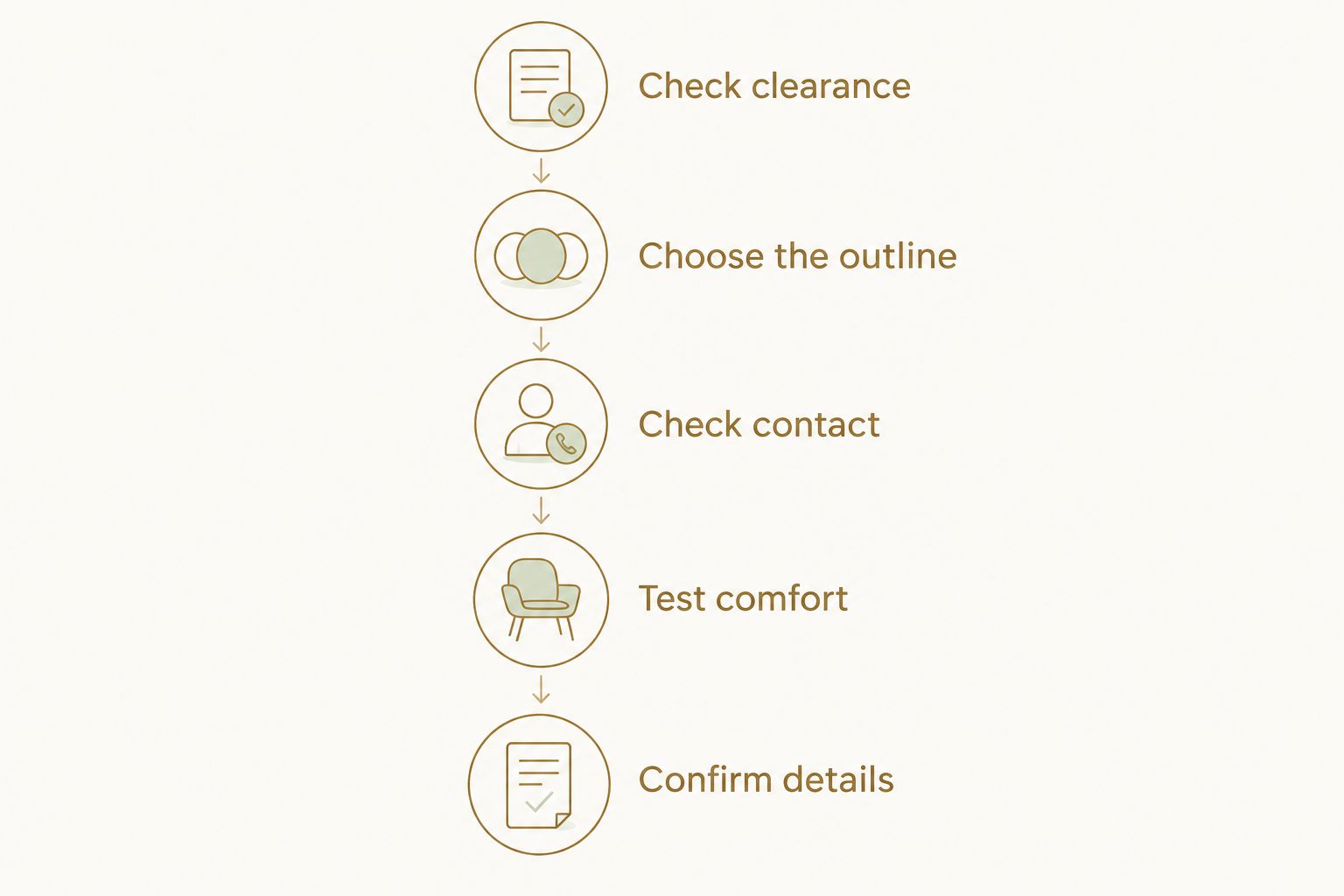
- Check clearance. View the engagement ring from the side and identify anything that extends beyond its band.
- Choose the outline. Compare a straight band, gentle curve, and pointed contour against the pear’s shape.
- Check contact. Identify where the wedding band approaches the center stone, prongs, or small accent diamonds.
- Test comfort. Assess the combined stack while bending your finger and making a relaxed fist.
- Confirm details. Ask for measurements and a fit assessment of the exact combination before ordering online.
Why this matters
A top-down photograph shows style, not the full fit. A wedding band can appear to nest neatly around a pear while its edge presses against a prong underneath. That is a reason to request a side view, not to assume the pairing works.
Your wedding band also needs to work independently if you plan to wear it alone. A pronounced contour creates room around an engagement ring but retains that contour when the engagement ring comes off. Decide whether a close-fitting stack or a standalone band matters more to you.
For a 2026 online purchase, separate these decisions: the appearance you like, the physical fit, and the purchase terms. A strong answer to one does not settle the others.
Which wedding-band shape works with a pear-shaped diamond?
The right shape depends on the setting and the look you want. No wedding-band shape fits every pear-shaped engagement ring. Use this comparison to narrow your choices before asking about a specific combination.
| Band style | Best for | Main benefit | Main trade-off |
|---|---|---|---|
| Straight band | A clean look with sufficient setting clearance | Simple outline that also works alone | Can leave a visible gap beside a projecting setting |
| Curved band | Following the rounded side of a pear | Softens the space around the center setting | The curve must match the actual ring, not just the diamond shape |
| Chevron band | Echoing the pear’s pointed outline | Adds a deliberate angular shape | A deep point can change the stack’s overall length |
| Open band | Leaving space around a projecting center setting | Avoids a continuous band across the central opening | The ends still need clearance from the stone and prongs |
| Ring guard or enhancer | Framing the engagement ring on both sides | Creates a coordinated, fuller stack | The opening must accommodate the exact engagement ring |
Straight bands: best for a simple, independent ring
Choose a straight band when you want a wedding ring that looks complete by itself. A setting that provides enough space underneath its center assembly can allow a straight band to sit close beside it.
Do not equate a high-looking center stone with guaranteed clearance. The supporting basket or shoulders can still obstruct the wedding band. Ask whether the specific band clears the entire setting, not whether the engagement ring is simply described as high-set.
Curved bands: best for following the rounded outline
A curved band creates an arc around the center setting. It is a useful starting point when you want a softer outline near the pear’s rounded end.
The limitation is the curve itself. Too shallow, and it still contacts the setting; too deep, and it creates space you did not intend. Compare the curve against the engagement ring’s outside dimensions, including its metalwork.
Chevron bands: best for repeating the pear’s point
A chevron band forms a V-shaped outline. It can echo the pear’s taper or create a pointed frame on the opposite side of the center stone.
Check the complete stack on your finger rather than judging the two rings separately. A pronounced V adds another visual point, which changes the balance. Choose it because you like that outline—not because every pear supposedly needs one.
Open bands and guards: best for deliberate framing
An open band leaves a break in its outline; a guard frames an engagement ring within a larger arrangement. These are different constructions, but both require careful attention to the space around the center setting.
Neither design guarantees compatibility. Check the opening, the position of any diamonds, and the points where the rings meet. An enhancer is a fit-dependent choice, not a universal solution.
Why wedding-band fit varies
Two pear-shaped rings can require different bands even when their diamonds look similar from above. These construction details explain the difference:
- Setting height: The space beneath the center setting affects whether another band can pass alongside it.
- Basket shape: Metal beneath the diamond can project beyond the engagement band and block a straight wedding ring.
- Pear orientation: A point facing along the finger creates a different outline from a pear set across it.
- Prong placement: The wedding band needs clearance from the prongs, especially around the pointed end.
- Band profile: Width, thickness, and raised details affect contact and how the stack feels.
- Accent settings: Exposed diamond edges and projecting metal details need inspection wherever the rings meet.
For your 2026 shortlist, request the same views of every candidate: face-on, side-on, and together with the proposed wedding band. Consistent views make meaningful comparisons easier than unrelated styled photographs.
How do you match metal, width, and sparkle?
Choose the structure first, then refine the finish. Matching metal color creates a continuous look; mixed metals create visible contrast. Neither approach fixes a band that presses against the engagement setting.
Width changes how much attention the wedding band receives. A narrow-looking band keeps the pear visually prominent, while a broader or multirow design adds more presence. There is no universal width requirement: use the actual dimensions and your finger’s available space.
Diamond settings change the texture. Pavé describes small diamonds set close together; bezel settings surround individual stones with metal. Compare their finished profiles rather than assuming either label guarantees a smooth fit beside your engagement ring.
Ava Lee Diamonds is best for couples who want customizable lab-grown diamond engagement-ring options. The practical limit is that customization alone does not establish wedding-band compatibility; request confirmation for the exact setting and band you select.
Which band details are useful to compare while shopping?
The Ava Lee Diamonds examples below illustrate two different approaches: a line of individually framed diamonds and a ring guard with diamond rows. Both use natural accent diamonds, so do not mistake these bands for lab-grown diamond products merely because your engagement ring contains a lab-grown center stone.
| Product | Best for | Verified details | Fit limitation to resolve |
|---|---|---|---|
| Five-stone bezel-set rose-cut stackable ring | Comparing a single-row diamond accent | 1/8 ctw natural diamonds in 14K yellow gold; five bezel-set stones | Confirm clearance between the individual settings and the engagement ring |
| Knife-edge double-row pavé ring guard enhancer | Comparing a framed stack | 1/3 ctw natural diamonds in 14K yellow gold; two diamond rows | Confirm that its opening accommodates your exact pear setting |
Here, ctw means combined diamond weight, not the weight of one stone. The five-stone ring totals 1/8 ctw, while the guard totals 1/3 ctw; both examples use 14K yellow gold. Those specifications describe materials and diamond weight, not whether either design fits your ring.
Use these examples to decide which construction you want to investigate. The stackable ring offers individually framed stones; the guard offers a fuller framing approach. Neither is a confirmed match for an unspecified pear-shaped engagement ring.


Does a wedding band have to sit flush against a pear-shaped ring?
A wedding band does not have to sit flush against a pear-shaped ring. A visible gap is an aesthetic choice when the rings otherwise fit comfortably and avoid problematic contact.
Define what you mean by flush before shopping. You might mean no visible gap from above, or you might mean the two metal bands touch along their sides. These are not always the same result. Ask for photographs that show both the appearance and the contact points.
Should the wedding band go above or below the pear?
Place the wedding band on the side that gives you the appearance and clearance you want. The pear’s point and rounded end create different spaces, so try both arrangements before deciding.
If you prefer the traditional wedding-band position closer to your hand, evaluate that arrangement first. Do not force a contour into place merely to preserve a particular order; choose a compatible design instead.
Can you choose the wedding band before the engagement ring?
You can choose the wedding band first, especially if wearing it alone is a priority. Use its shape and dimensions as requirements when selecting the engagement setting.
For a 2026 ring-building appointment or online consultation, share the band’s side profile as well as its face-on photograph. A precise fit question is more useful than asking whether a setting generally works with wedding bands.
Your online buying checklist
Before ordering your 2026 wedding stack, turn your preferences into questions that produce specific answers:
- Fit: Will this exact band clear this exact engagement setting?
- Contact: Where do the rings touch, and do any diamonds or prongs contact the neighboring ring?
- Dimensions: What are the band width, thickness, and relevant opening measurements?
- Comfort: How does the complete stack fit compared with the engagement ring alone?
- Standalone wear: Do you like the wedding band without the engagement ring?
- Purchase terms: What resizing, return, and warranty terms apply to your selected pieces?
Set your total budget before choosing the accent style. Keep the engagement ring and wedding band in the same decision so a decorative upgrade does not crowd out the ring you most want. Compare complete specifications rather than diamond weight alone.
FAQ
What's the best wedding band for a pear shaped lab grown diamond ring?
The best wedding band is one that clears the exact engagement setting and gives you the outline you prefer. Start with a straight band for simplicity, then compare curved or chevron designs if the setting obstructs it.
Can I wear a straight wedding band with a pear-shaped engagement ring?
Yes, you can wear a straight wedding band if it clears the engagement ring’s basket, prongs, and center stone. A visible gap is acceptable; pressure against the setting is not a reason to force a closer fit.
Does a lab-grown diamond need a different wedding band from a mined diamond?
No, diamond origin does not determine wedding-band fit. The engagement ring’s dimensions, setting construction, and contact points determine compatibility.
Is a curved band better than a chevron band for a pear?
Neither shape is automatically better. A curved band follows a softer outline, while a chevron creates a pointed outline; the exact contour still needs to fit your setting.
Can I pair natural diamond accents with a lab-grown engagement diamond?
Yes, you can pair natural diamond accents with a lab-grown engagement diamond. Check the band’s material description separately so you know which diamonds are natural and which are lab-grown.
Should I buy my pear engagement ring and wedding band together?
Choosing both rings together lets you assess their appearance and fit as a complete stack. You can also buy separately, but keep the engagement ring’s measurements and side-profile images available.
Will any ring guard fit my pear-shaped engagement ring?
No, a ring guard must accommodate the exact engagement setting. Confirm the opening and contact points before choosing one, even when its overall shape looks suitable.
One last thing
The most useful photograph is not always the prettiest one. Request a side-on image showing both rings together: it reveals clearance that a face-on photograph hides. Make that your final fit check before approving the pairing.
