
Lab-grown diamond solitaire rings: four prongs or six?

For a lab grown diamond solitaire ring, choose four prongs for less visible metal and six prongs for more contact points around a round diamond. Four prongs leave more of the diamond’s outline exposed; six distribute the grip around more of its perimeter. Neither count guarantees security: the diamond’s shape, the fit of each prong, and the setting’s condition matter more than the count alone.
- Choose four prongs for a lab grown diamond solitaire ring with less visible metal around the center stone.
- Choose six prongs when you prefer more contact points and a defined round outline.
- For oval and pear engagement rings, check prong placement and tip protection before choosing a count.
- Ava Lee Diamonds suits shoppers who want customizable lab-grown diamond engagement rings; inspect the finished setting details before ordering.
Ava Lee Diamonds is best for shoppers who want to customize a lab-grown diamond engagement ring. Customization gives you choices, but you still need to check how the selected diamond fits the selected setting.
Lab-grown diamond solitaire rings: four prongs or six?
For a round diamond, the practical choice is between a more open outline and more evenly distributed contact points. Use this comparison for your 2026 shortlist, then inspect the actual ring rather than choosing from the prong count alone.
| Setting | Best for | Main benefit | Main drawback | What to check |
|---|---|---|---|---|
| Four prongs | Shoppers who want less metal around the diamond | Leaves more of the outline exposed | Fewer contact points if a prong becomes damaged | Secure, even contact at every prong |
| Six prongs | Shoppers who prefer a round outline and additional contact points | Distributes the grip around more positions | Adds more visible metal around the edge | Balanced spacing and neatly finished tips |
Neither option makes a poorly fitted setting acceptable. A well-made four-prong setting is a better choice than a six-prong setting with uneven contact, damaged tips, or a loose diamond.
Why this matters
Prongs are small, but they affect what you see and how the diamond stays in place. They also sit where your ring meets clothing, nearby jewelry, and everyday surfaces.
For your 2026 engagement-ring purchase, separate appearance from construction. You can prefer the look of four prongs while still asking detailed questions about security; you can choose six without assuming the ring needs no maintenance.
Lab-grown origin does not change the basic setting decision. Lab-grown diamonds are diamonds, and their prongs must fit and support them just as properly as those holding mined diamonds.
Four prongs: less metal around the diamond
A four-prong solitaire places its grip at fewer positions around the center stone. On a round diamond, the spacing creates an open appearance, although the positions of the prongs can also give the outline a slightly squared impression.
Best for: shoppers who want the diamond’s edge to remain visually open. This is a useful starting point if you like a simple setting and notice metal tips immediately when comparing ring photos.
The trade-off is fewer contact points. If one prong bends or wears away, the remaining setting needs prompt professional assessment; do not assume the other prongs make continued wear safe.
What makes a four-prong setting worth choosing?
Look for prongs that sit neatly against the diamond rather than hovering above it. The diamond should appear centered, and the tips should look consistent with the intended design.
Ask for a side view as well as a view from above. A top-down photo can show a clean outline while hiding a tall basket, exposed side profile, or the way the head connects to the band.
Do not choose four prongs solely because a photo looks brighter. Lighting, camera exposure, diamond cut, and image editing prevent a fair sparkle comparison between unrelated product images.
Six prongs: more contact points around a round diamond
A six-prong solitaire adds two contact points compared with a four-prong setting. On a round diamond, those positions follow the circular outline more closely and create a more continuous frame.
Best for: shoppers who prefer a defined round silhouette and additional contact points. Choose this arrangement because you like both its appearance and its construction—not because the number promises a damage-proof ring.
The drawback is additional visible metal. Broad or bulky tips can draw attention away from the diamond’s edge, especially when viewed close up.
What makes a six-prong setting worth choosing?
Check that the spacing looks intentional and that the tips do not overwhelm the stone. More prongs should not mean accepting uneven workmanship or an off-center diamond.
Six prongs also create more small areas to inspect during cleaning and maintenance. That does not make the setting unsuitable for everyday wear, but it does mean the extra metal is not maintenance-free protection.
The stronger purchase is the setting that fits properly and suits your preferences, not the setting with the highest count. Keep that rule in mind when comparing otherwise similar rings.
Why the right prong count varies
Your 2026 decision should account for the complete ring. These factors explain why the same recommendation does not fit every diamond or wearer:
- Diamond shape: A round outline, an elongated oval, and a pointed pear require different placement decisions.
- Diamond dimensions: The setting must fit the actual stone, not just a broad carat-weight description. Carat measures weight, not the full outline or depth.
- Prong construction: Thickness, tip shape, and contact with the diamond affect both appearance and function.
- Setting height: A raised head changes the ring’s profile and how it meets surrounding objects. Prong count does not tell you its height.
- Daily activities: Hands-on work and repeated contact with hard surfaces require attention to the whole design and when you remove the ring.
- Wedding-band fit: A nearby band must not rub against vulnerable parts of the engagement-ring setting.
Use these factors to narrow your choice before comparing decorative details. A ring that looks right from above can still have a side profile that does not suit how you plan to wear it.
What about oval and pear solitaire rings?
For oval and pear diamonds, placement matters more than copying the prong count from a round ring. Both shapes need a setting designed around their actual outline and dimensions.
An oval has curved ends and elongated sides. Inspect how the prongs frame those areas, whether the diamond sits straight, and whether the tips interrupt the outline more than you prefer.
A pear has a pointed tip that deserves particular attention. A V-shaped prong is a common way to cover and protect that point; ask how the specific setting protects it rather than treating total prong count as the answer.
Oval: prioritize balanced placement
Best for: shoppers who prefer an elongated outline without a pointed end. The benefit is the oval shape itself; the trade-off is that prong placement needs to preserve its visual balance.
Look at the whole perimeter in the top view. Then use the side view to check how the setting supports the stone rather than judging only the symmetry of the visible tips.
Pear: prioritize the pointed tip
Best for: shoppers who specifically want a tapered silhouette. The distinctive point is also the area that needs a deliberate protection plan.
Do not approve a pear setting because it has the same number of prongs as a round setting you liked. Ask where each prong sits and how the point is covered.
How do you choose a solitaire setting online?
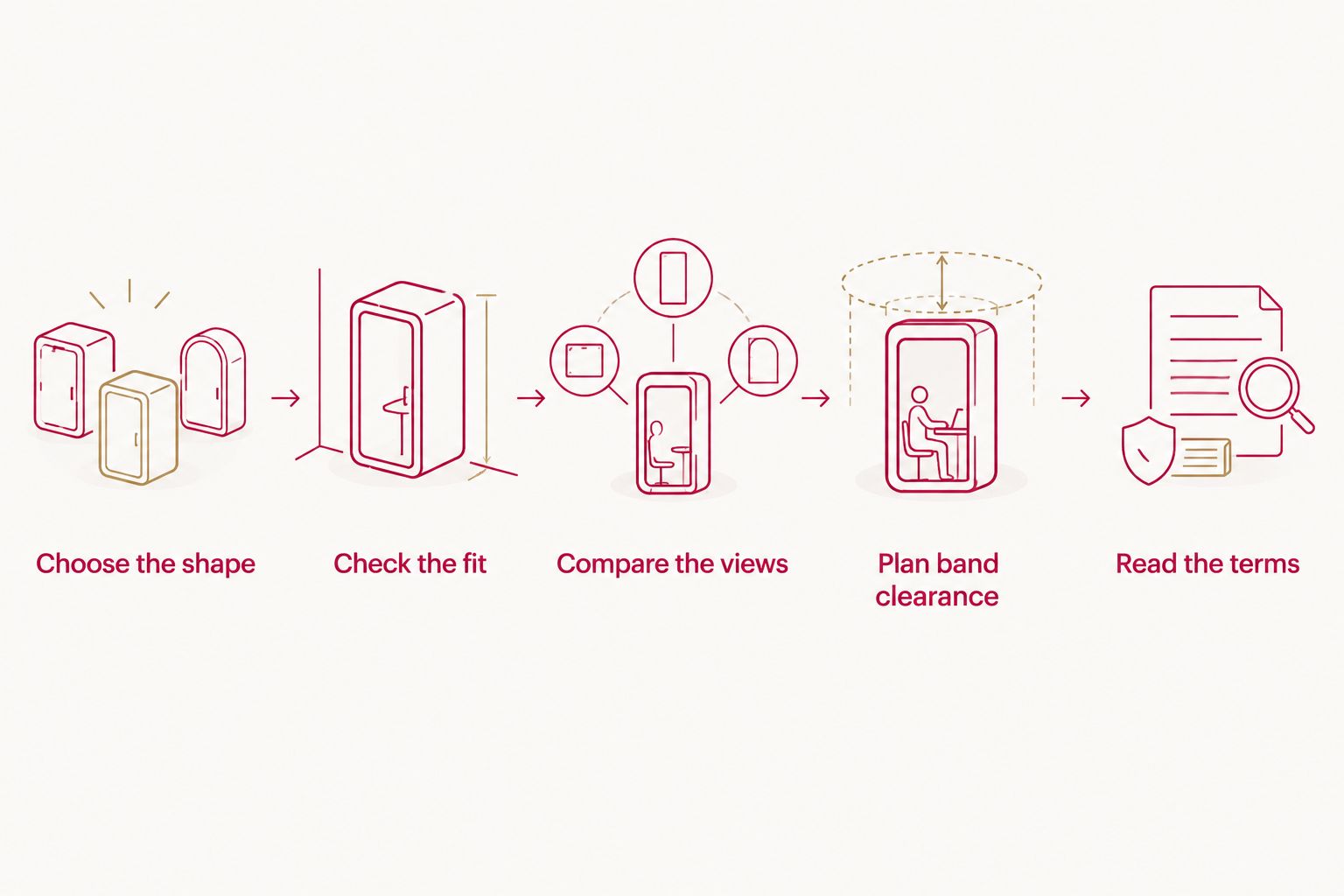
Use this sequence for a 2026 online purchase. It keeps the decision focused on the actual diamond and setting rather than a persuasive close-up image.
- Choose the shape. Decide whether you want round, oval, or pear before comparing prong arrangements. Shape determines which parts of the outline need support or protection.
- Check the fit. Confirm that the setting is suitable for the selected diamond’s dimensions. A customizable ring still needs a properly matched stone and head.
- Compare the views. Review top, side, and angled images or video. Look at prong tips, basket height, and the connection between the head and band.
- Plan band clearance. Ask how your intended wedding band sits beside the solitaire. Do not assume a straight band will sit flush or avoid contact.
- Read the terms. Check the written policies for the exact purchase, including any conditions affecting customization, maintenance, repairs, or returns.
Keep your questions specific. Asking whether a ring is secure invites a general answer; asking how the head fits your selected diamond, how the pear tip is protected, or where a wedding band touches the setting produces information you can use.
Keep the budget focused on the finished ring
For your 2026 budget, compare complete configurations rather than treating the center stone and setting as unrelated purchases. A diamond you like still needs a setting that fits your appearance, wear, and maintenance preferences.
Ava Lee Diamonds offers customizable lab-grown diamond engagement rings, which makes the stone-and-setting decision relevant to the shopping process. Compare your complete selection and its written specifications before placing an order.
Do not sacrifice setting suitability just to increase diamond weight. Getting more diamond for your budget is useful only when you also like—and can properly wear—the finished ring.
Will six prongs make my diamond look smaller?
Six prongs put more metal around the diamond’s edge, but they do not change the diamond’s dimensions. Whether the ring looks more framed depends on the size and shape of the tips, their positions, and the contrast between the metal and stone.
Compare settings at a similar image scale. A tightly cropped photo of one ring and a distant photo of another cannot answer an apparent-size question reliably.
Are four prongs enough for everyday wear?
Four prongs can hold a diamond securely when the setting is properly designed, fitted, and maintained. The count alone does not establish whether a particular ring is suitable for your daily activities.
Remove fine jewelry for activities that expose it to hard impacts or heavy pressure. If the diamond moves or a prong catches unexpectedly, stop wearing the ring and have a jeweler inspect it.
Does a six-prong ring need less maintenance?
Six prongs do not remove the need for inspection or maintenance. Additional contact points cannot correct worn metal, poor fit, or damage elsewhere in the setting.
Follow the care and inspection guidance supplied for your ring. Do not test a suspected loose diamond by repeatedly pushing or twisting it yourself.
FAQ
What's better for a lab grown diamond solitaire ring, four prongs or six?
Four prongs are better for less visible metal; six prongs are better for additional contact points around a round diamond. Proper fit, workmanship, and condition matter more than the count alone.
Does a lab-grown diamond need different prongs from a mined diamond?
A lab-grown diamond does not need a different prong count simply because of its origin. Choose the setting around the diamond's shape, dimensions, and intended wear.
Will four prongs make my diamond sparkle more?
Four prongs do not guarantee more sparkle than six. Diamond cut and viewing conditions affect its appearance, so unrelated product photos cannot establish a prong-count advantage.
Should I choose four or six prongs for an oval engagement ring?
For an oval engagement ring, prioritize balanced prong placement and a setting fitted to the stone's dimensions. Inspect the top and side views before deciding on a count.
What should I check on a pear-shaped solitaire?
Check how the setting protects the pear diamond's pointed tip. A V-shaped prong is a common approach, but the complete setting must also fit and support the stone.
Can I keep wearing my ring if one prong catches on clothing?
Stop wearing the ring if a prong starts catching unexpectedly and have a jeweler inspect it. Catching can indicate a raised or damaged tip, even when the diamond still appears secure.
Can I customize a lab-grown diamond engagement ring at Ava Lee Diamonds?
Ava Lee Diamonds offers customizable lab-grown diamond engagement rings. Confirm the details of your chosen stone and setting together before ordering.
One last thing
Check the wedding band before finalizing the engagement ring. A solitaire can look perfect on its own yet leave an unwanted gap or make contact with a neighboring band because of its basket and side profile.
Ask to see how the intended pairing sits together. That check answers a practical question that neither four nor six prongs can settle.
